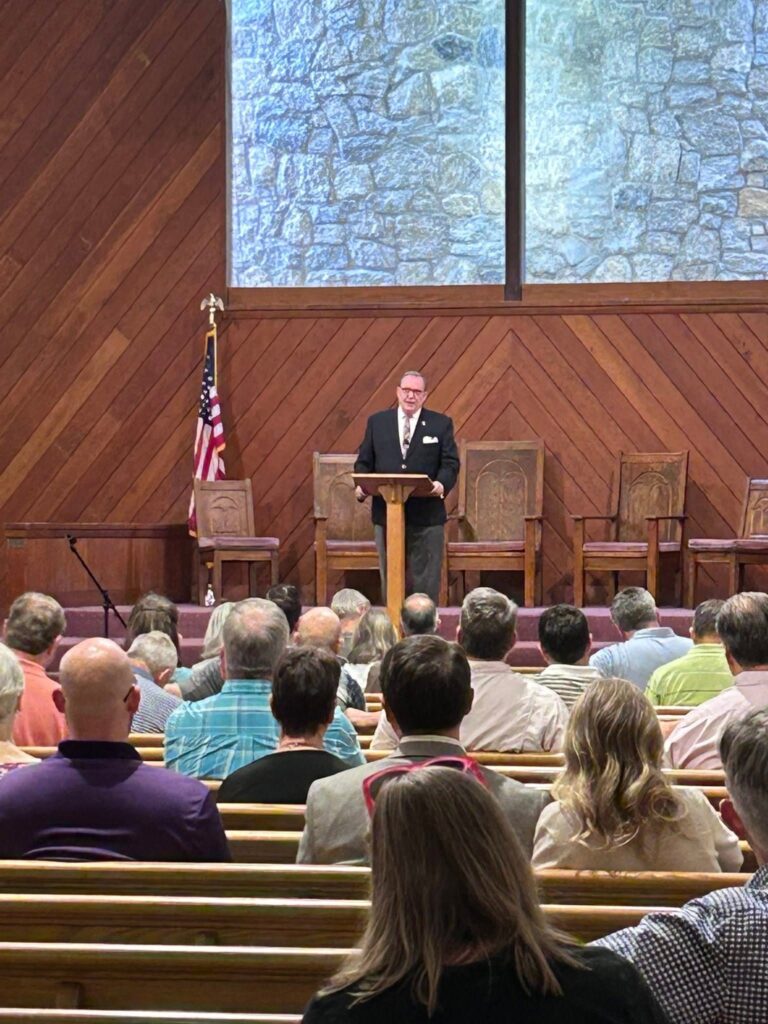
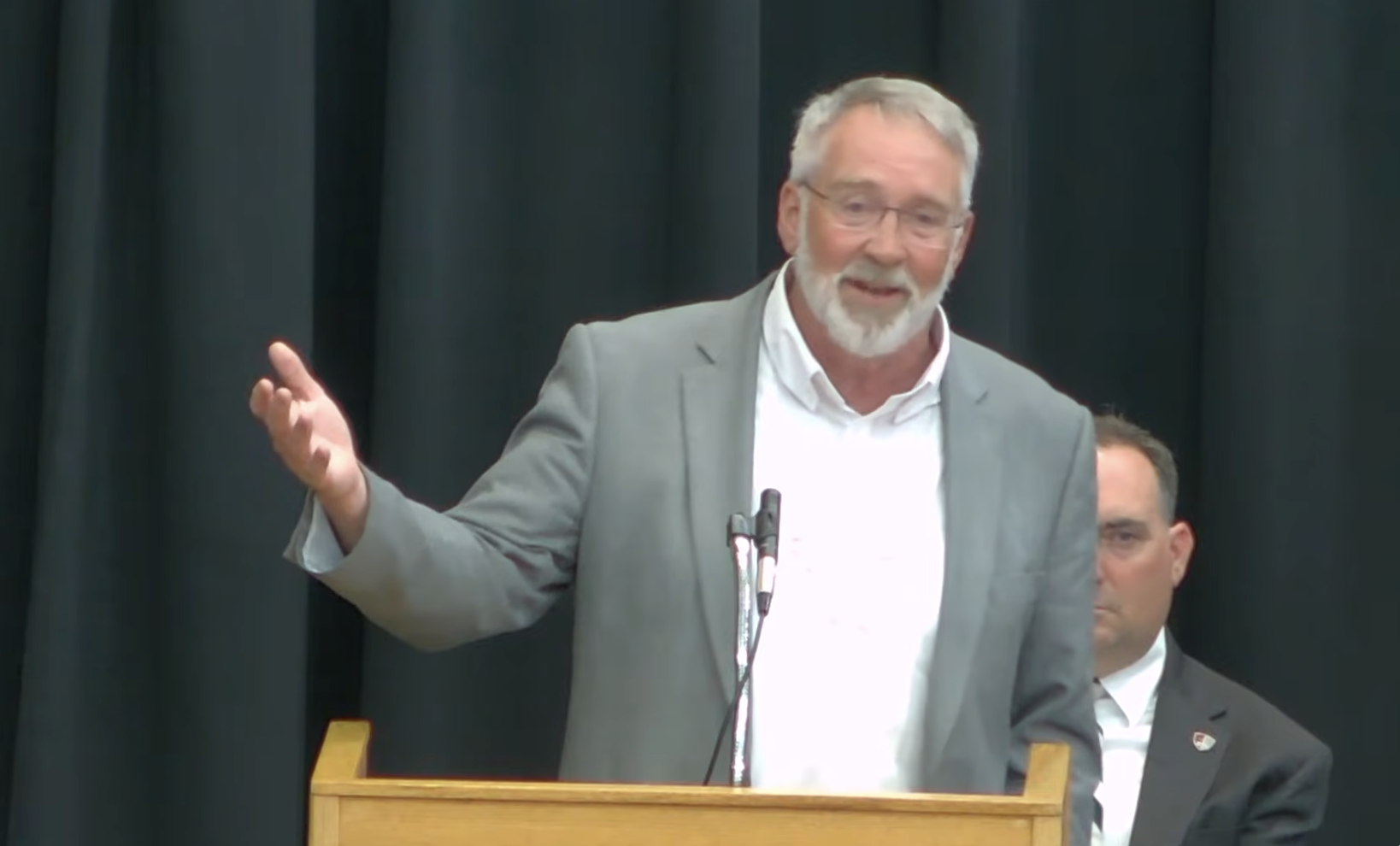
The 2026 meeting of General Synod marked a significant moment for Outreach North America (ONA) as Director Rev. Morrie Lawing presented a renewed vision for church planting and revitalization across the Associate Reformed Presbyterian Church. Building on the trust recently placed in the agency by Synod, Lawing challenged the denomination to shift its focus from managing decline to intentionally advancing the gospel through local churches.
“This is not about managing the ARP’s growth from a distance,” Lawing explained. “Our vision is to ignite growth from within our presbyteries. We are partners with the presbyteries in fulfilling the Great Commission on American soil.”
That partnership lies at the heart of Outreach North America’s mission. Rather than directing ministry from the denominational level, ONA seeks to equip, encourage, and serve presbyteries as they pursue church planting and revitalization in their own communities.
A Call to Face Reality
Lawing also challenged Synod to honestly evaluate the denomination’s current trajectory.
While acknowledging that recent membership losses include churches dismissed to other denominations and congregations that faithfully completed their ministry, he noted a concerning trend: the denomination is closing churches at a faster pace than it is planting new ones.
“If we are closing more churches than we are planting, we are not growing—we are managing a slow sunset,” he said.
The message was not intended to discourage but to refocus priorities. Christian education, retreat ministries, and global missions remain essential ministries of the denomination, Lawing emphasized. Yet without healthy local churches, the long-term vitality of every other ministry is affected.
“The local church is the foundational outpost of the gospel,” he said. “It is the engine of our entire denomination.”
Presbyteries Leading the Way
Despite the challenges, Lawing pointed to encouraging examples of presbyteries that have intentionally stepped back to pray, plan, and pursue church planting.
Florida Presbytery was recognized for establishing a strategic committee focused on multiplication under the leadership of Rev. Tom Hawkes. Another presbytery recently committed $500,000 toward planting five churches over the next five years after a season of prayerful planning. Catawba Presbytery has likewise begun evaluating new strategies for church expansion.
Lawing encouraged every presbytery, regardless of size, to begin similar conversations.
“Gather a few men, invite us to join you, and let’s talk seriously about how you can advance church planting and revitalization,” he urged. “This work happens at the presbytery level.”
Outreach North America pledged to assist any presbytery interested in developing a strategy for multiplication through retreats, planning sessions, and ongoing partnership.
Ordinary Means, Extraordinary Grace
To illustrate what church planting looks like on the ground, Lawing introduced Rev. James Ritchey, pastor of River City Reformed Presbyterian Church in Little Rock, Arkansas.
River City was officially organized as a congregation this year after beginning as a church plant in 2018 under the leadership of Rev. Howard Wheeler.
Ritchey described the congregation’s growth not as the result of innovative programs or marketing, but through a steady commitment to the ordinary means of grace.
“We have not done anything flashy or innovative,” he said. “We have simply sought to prioritize the Word, prayer, and the sacraments and trust the Lord to bless them.”
The church has experienced steady growth through faithful Lord’s Day worship, Bible studies, prayer meetings, university outreach, local festivals, and personal relationships. Visitors have come through internet searches, community events, and invitations from friends, many eventually becoming committed members.
Ritchey reminded Synod that church planting often progresses slowly but bears fruit over time.
“It is easy to become discouraged during the day of small things,” he said. “But as time passes, you begin to see the Lord’s surprising work in people’s lives and in your own heart.”
He also expressed gratitude for the decades of support church plants have received from Outreach North America and the General Synod.
A Ten-Year Challenge
Returning to the podium, Lawing acknowledged one of the denomination’s greatest needs.
“The bittersweet reality is that we have resources,” he said, “but we lack sufficient reach and men willing to engage in the work.”
Many congregations desire to “mother” daughter churches, yet qualified church planters remain in short supply.
To address this need, Outreach North America presented a bold but attainable vision. With eight presbyteries in the ARP, the Board challenged each presbytery to plant one new church each year for the next ten years. While some presbyteries may plant multiple churches and others fewer, the collective goal would result in 80 new churches by 2036.
Lawing emphasized that such a vision cannot be accomplished through budgets or organizational strategy alone.
“It is not ultimately a budget problem,” he said. “We have not because we ask not.”
Alongside Synod’s previously approved week of prayer, Outreach North America proposed adding four quarterly days of prayer and fasting each year, asking God to raise up new church planters, strengthen struggling congregations, and renew the denomination’s commitment to gospel ministry across North America.
His closing appeal summarized the heart of the evening:
“Let us stop managing decline, fathers and brothers. Let us begin praying for a genuine awakening in the ARP denomination.”
The presentation served as both a sober assessment of current realities and a hopeful call to renewed faithfulness. Through strengthened partnerships with presbyteries, intentional church planting, and sustained prayer, Outreach North America invited the denomination to pursue a future marked not by decline, but by gospel expansion.